Information systems
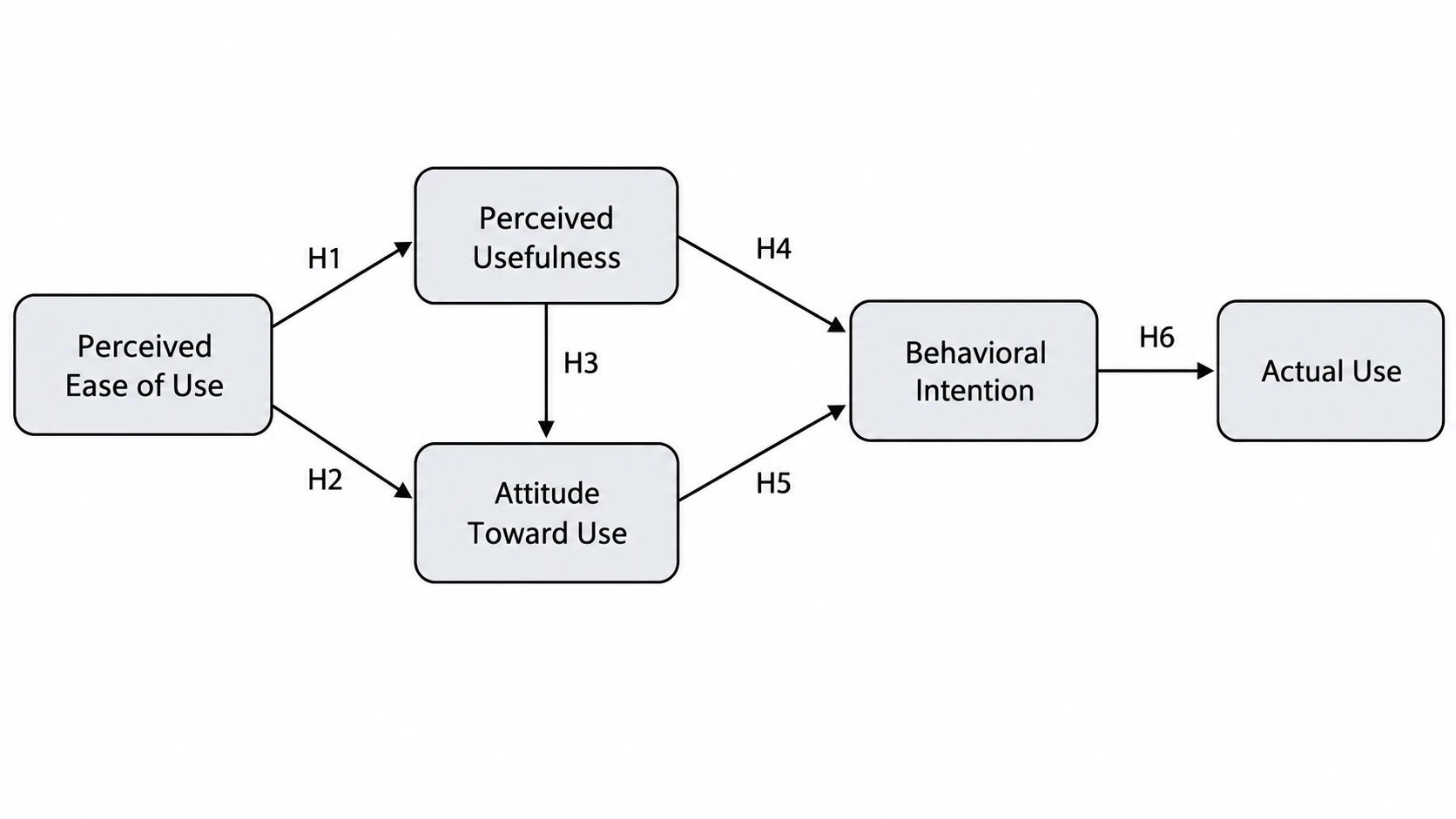
Technology Acceptance Model
Trace ease of use, usefulness, and attitude through intention to actual use.
Describe your variables and how they connect, and get a clear diagram.
Use this AI conceptual framework generator to turn the variables, hypotheses, and relationships you have already defined into a diagram for your thesis or research proposal.
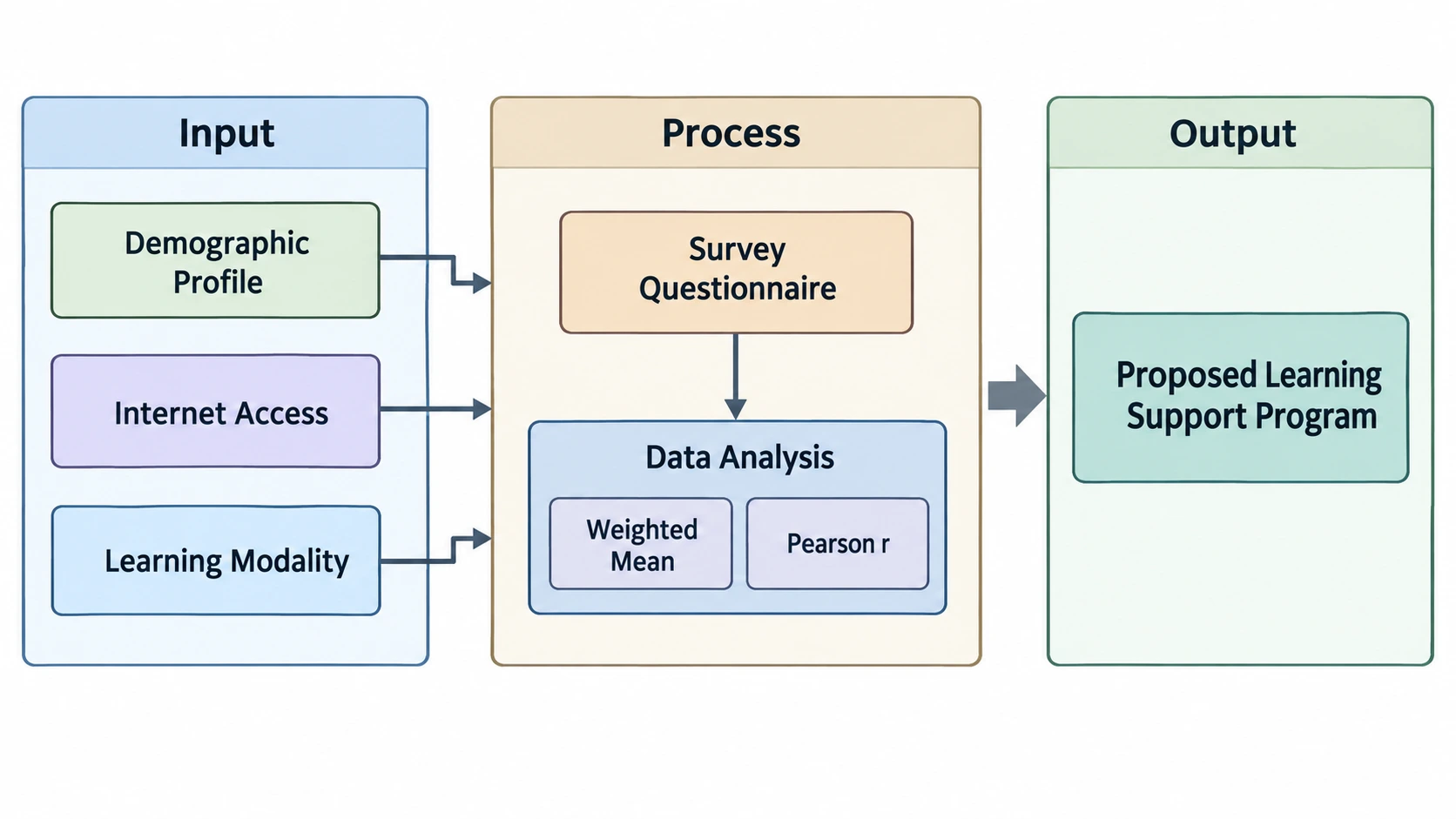
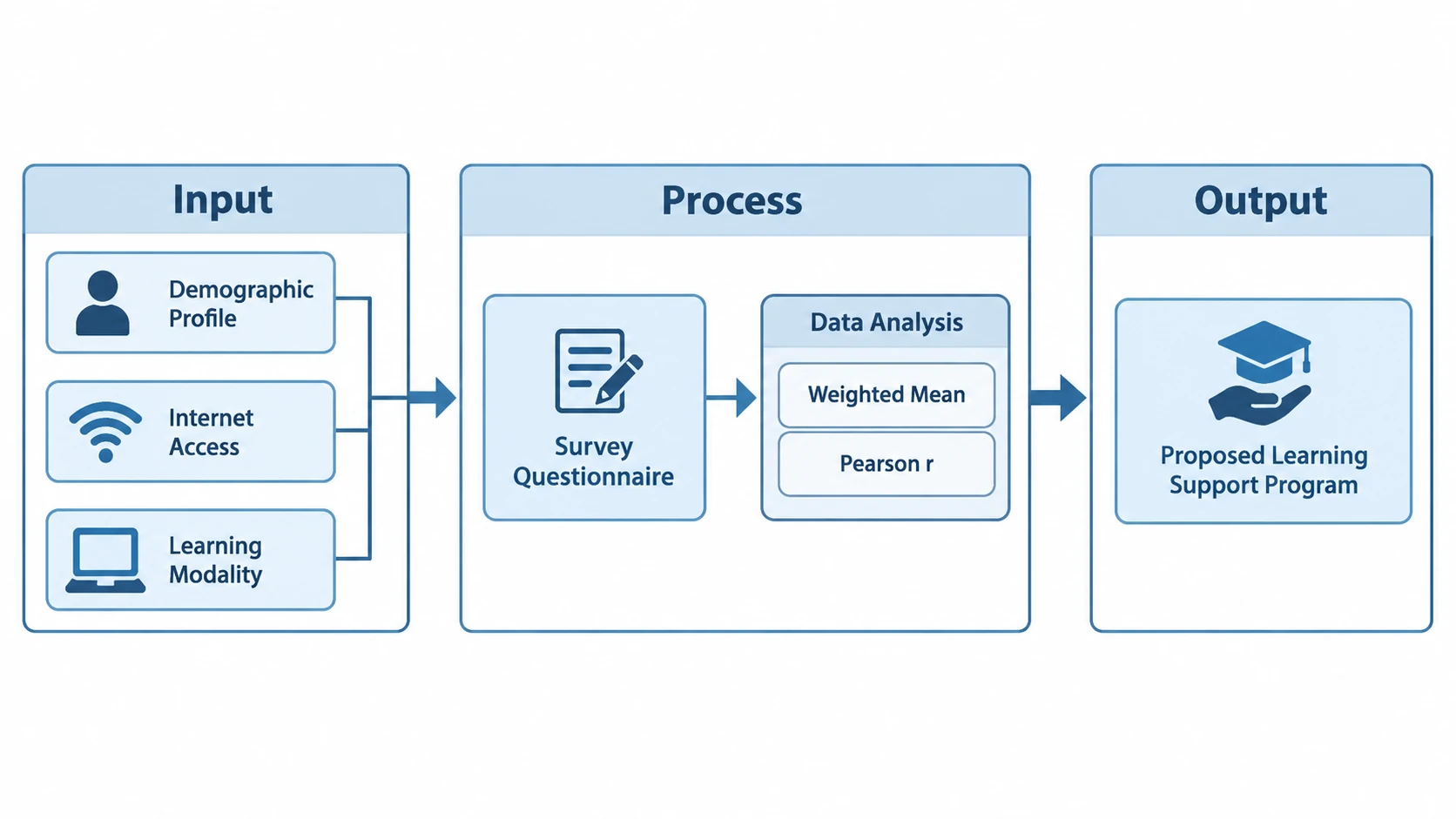
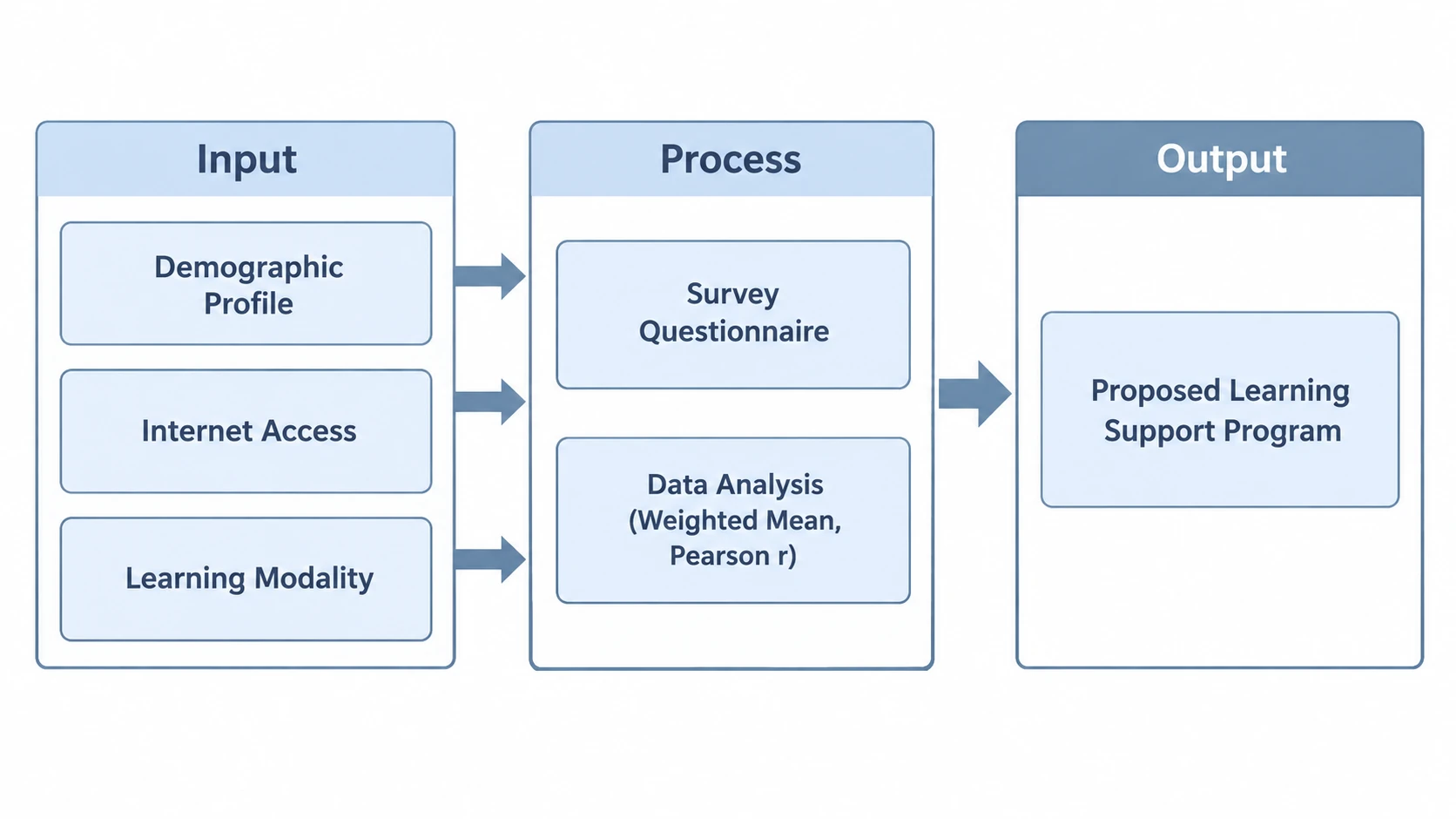
Connect learning conditions, research activities, and a proposed support program through an Input–Process–Output structure.
Input–Process–Output conceptual framework for a study on online learning and student performance. Input: students' demographic profile, internet access, learning modality. Process: survey questionnaire, data analysis using weighted mean and Pearson r. Output: proposed learning support program.
Name the variables, explain each connection, and specify the hypotheses that belong on each path.
Conceptual framework for a management study: 1transformational leadership (independent variable) increases 2employee innovative behavior (dependent variable) through 3psychological empowerment (mediator), and 4organizational support (moderator) strengthens the link between leadership and empowerment. Label the paths H1: leadership → innovative behavior, H2: leadership → psychological empowerment, H3: psychological empowerment → innovative behavior, H4: organizational support moderates H2.
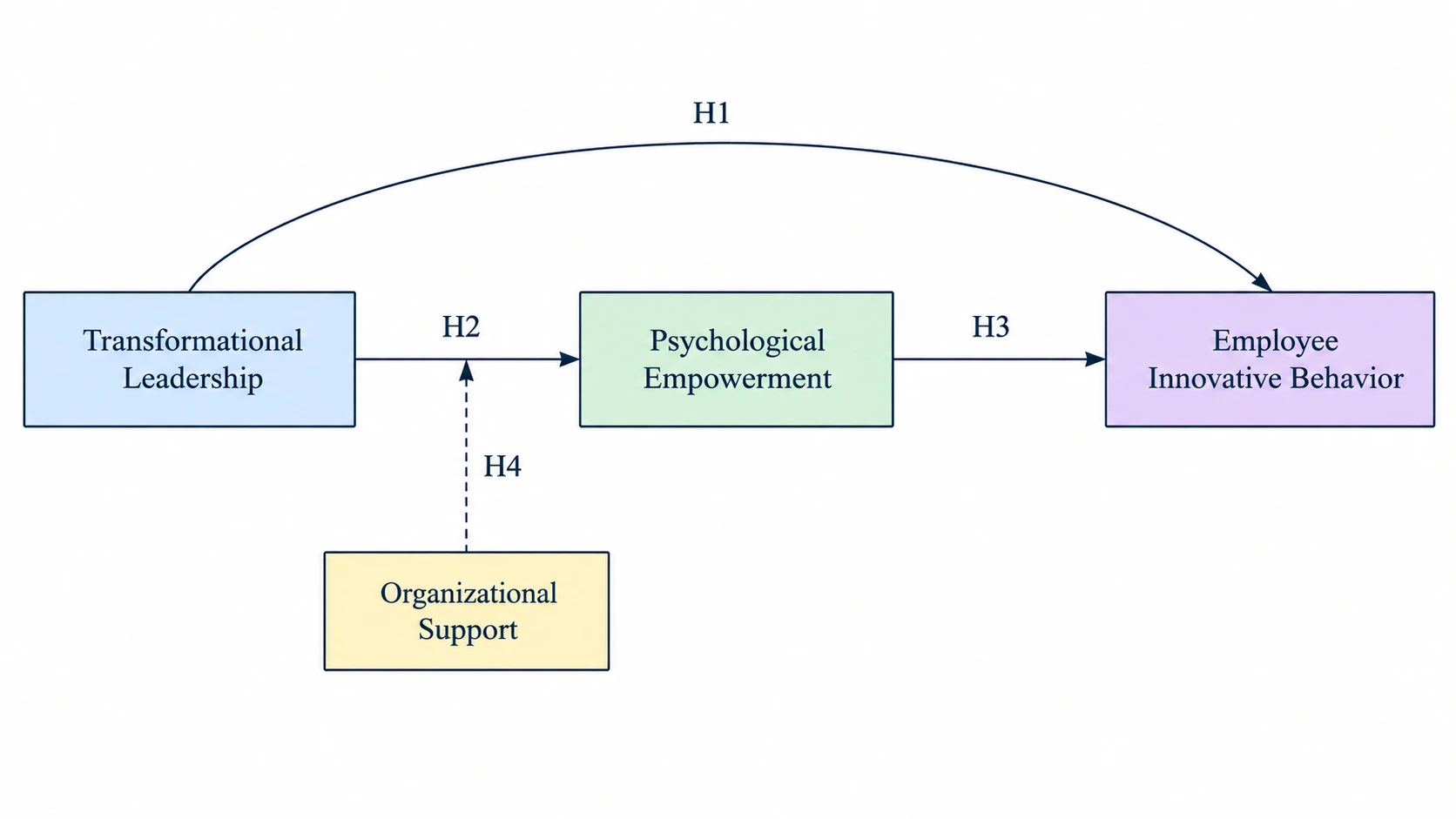
Find a structure that fits the relationships you want to explain, then use it as a template.
Trace ease of use, usefulness, and attitude through intention to actual use.
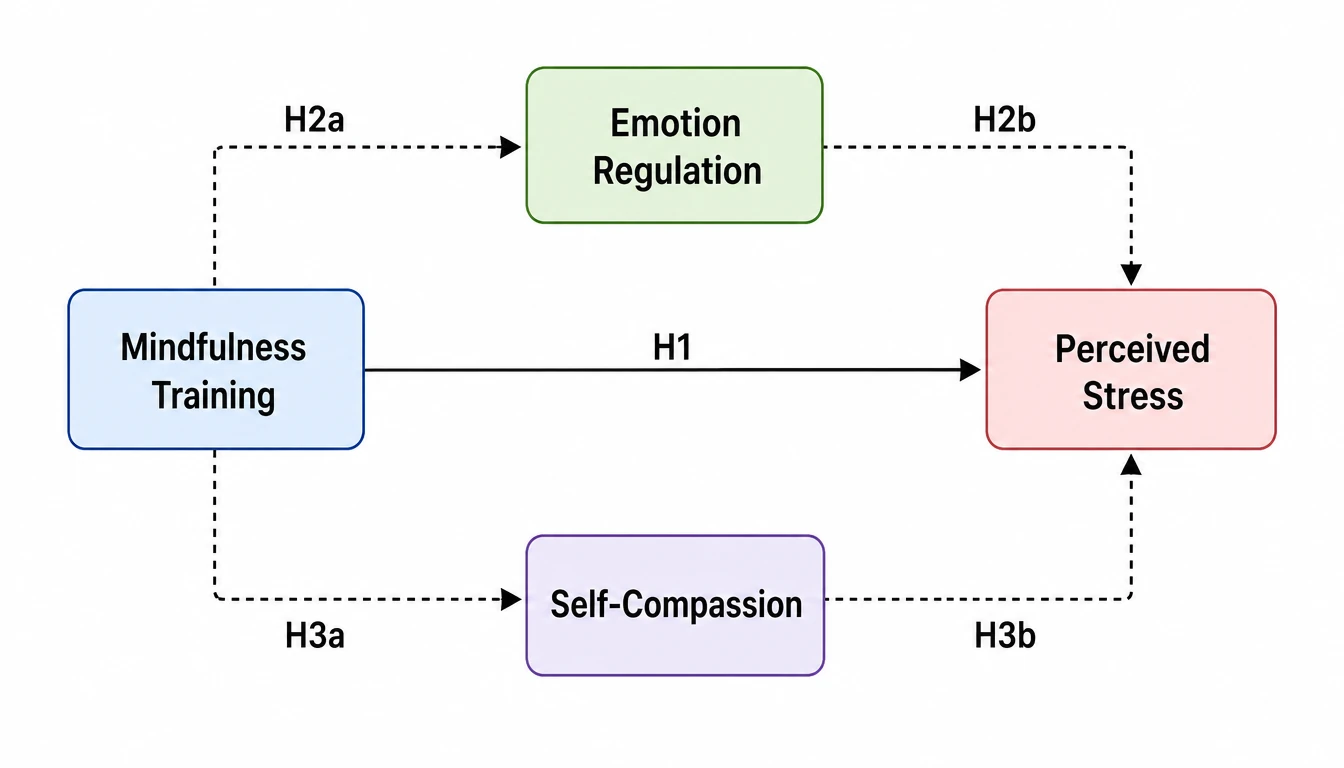
Compare a direct path with two parallel routes through emotion regulation and self-compassion.
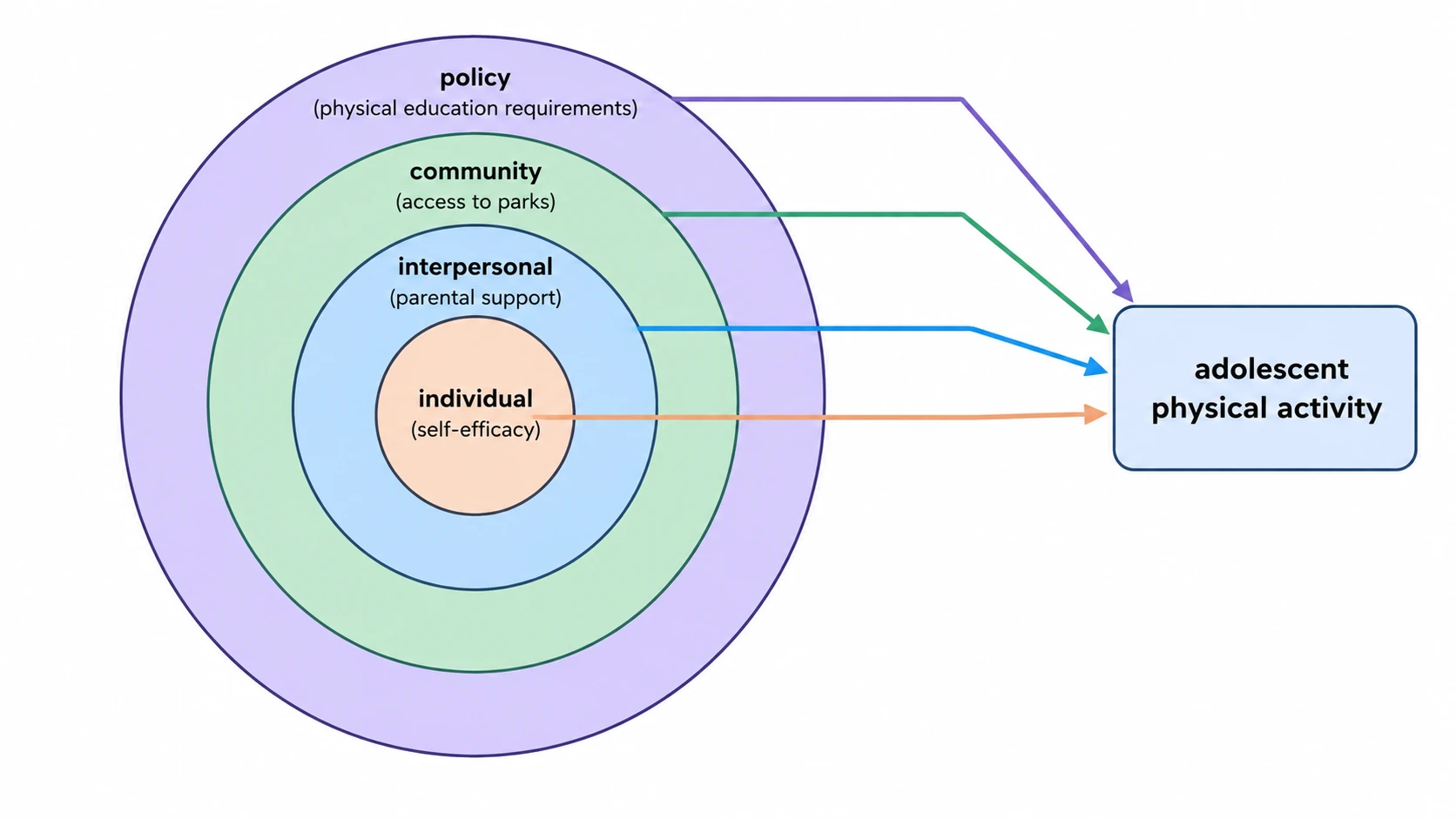
Connect four nested levels of influence to adolescent physical activity.
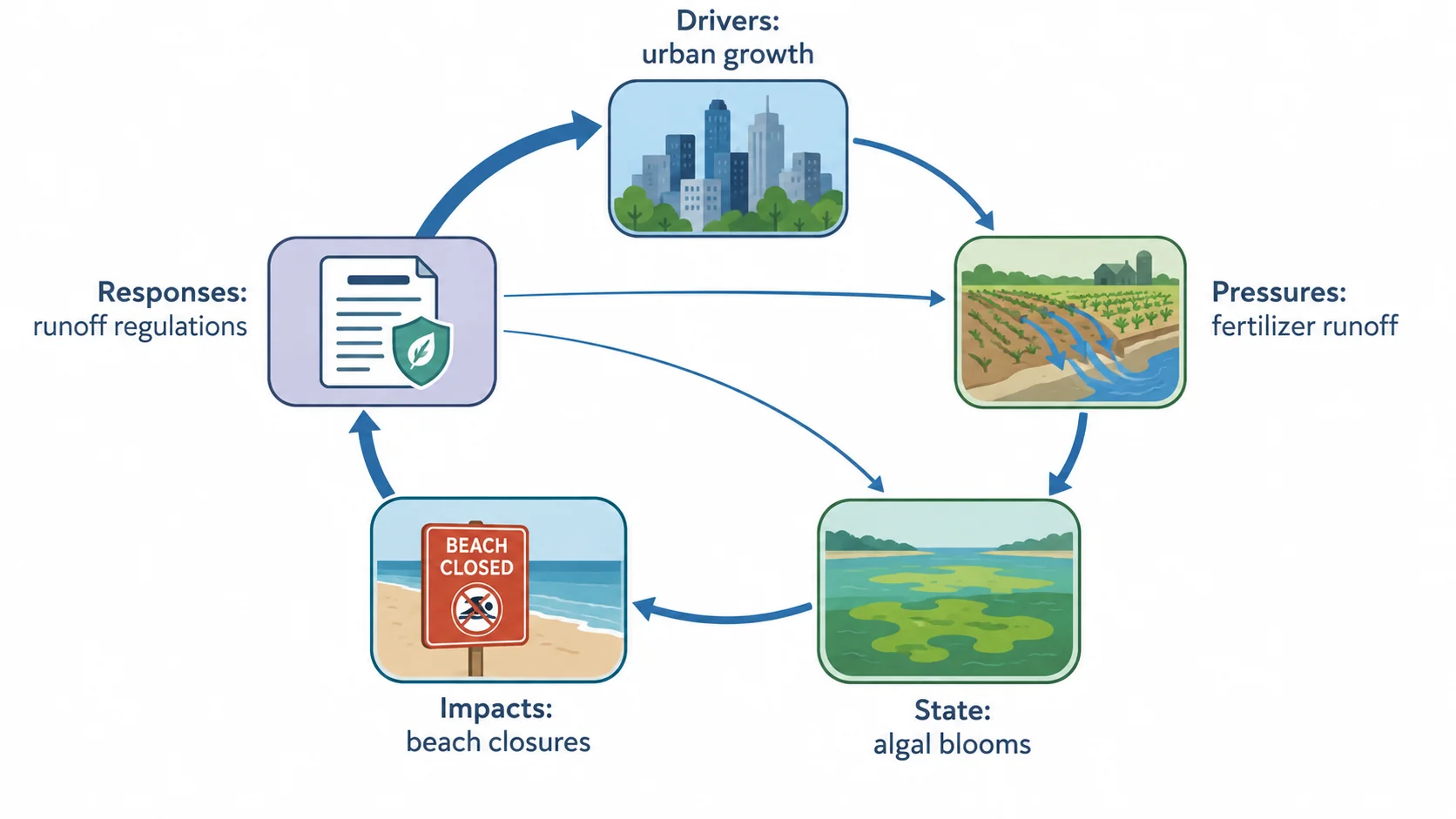
Follow drivers through environmental impacts and trace the response feedback loops.
Describe your relationships. Generate a draft. Refine it in the studio.
Replace the example with your own variables, relationships, and hypothesis labels.
Check your description and image settings, then generate a draft. Not the layout you wanted? Generate again for another one.
Request changes with Edit image, choose Download PNG, or continue with Edit in canvas.
A conceptual framework usually sits in your literature review or methodology chapter. Check four things before you add it.
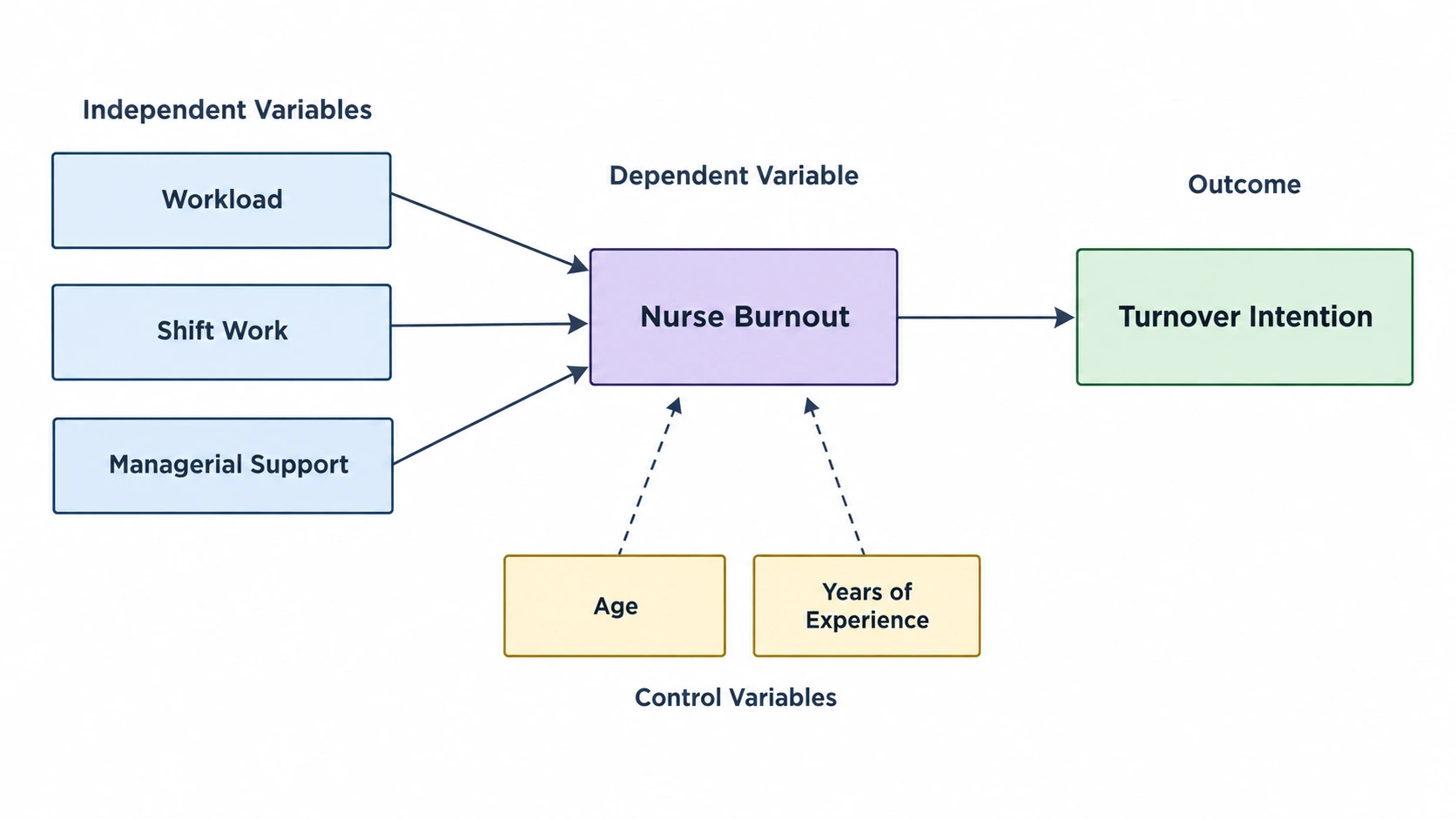
This study examines how workload, shift work, and managerial support relate to nurse burnout, and how burnout relates to turnover intention. Age and years of experience are treated as control variables.
Figure 2.1 presents the conceptual framework that guides the hypotheses tested in this study.
What to know before you create your first framework.
A conceptual framework is a diagram, usually with a short explanation, that shows the main concepts or variables in a study and how you expect them to relate. In a thesis or research proposal, it connects your literature review to your hypotheses, data collection, and analysis.
Choosing an example is free. With the default settings (GPT Image 2, 1K), each generation uses 10 credits. The studio shows the required credits for other models and image settings before you generate or request a revision.
Yes. Replace its variables, relationships, and labels with those from your own study. Choose a structure that matches your research question.
Include the exact variable names, their roles, the direction of each relationship, and any mediators, moderators, controls, or hypothesis labels that need to appear.
Yes. Instead of variables and hypotheses, describe the central phenomenon, the concepts or themes around it, and how they connect. Check the layout carefully; loosely structured concept maps may take more than one draft.
No. It visualizes the relationships you describe. You are responsible for their theoretical basis, supporting evidence, and interpretation. Follow your institution’s or journal’s figure and AI-use requirements.
You can request image revisions with text instructions and download the result as a PNG.
Prepare a conceptual framework draft that makes your variables and proposed relationships easier to discuss.